
There’s No Sugar-Coating It: Diabetes Puts Your Eyes at Risk
Diabetes is a life-changing disease that affects over 40 million Americans, and it can lead to additional health complications, especially concerning your eyes. If you have type 1 or type 2 diabetes, you are at an increased risk of developing glaucoma, cataracts, and diabetic retinopathy.
Many of these conditions do not show obvious symptoms in their early stages, making regular, annual eye exams especially important. Our diabetic eye exams focus specifically on diabetic complications to detect any early signs of potentially vision-threatening diabetic eye diseases.
Symptoms of Diabetic Eye Disease
Many diabetes-related eye diseases begin and progress with few early symptoms, meaning they can exist and worsen for years before you notice signs. When symptoms do appear, it often means significant irreversible vision damage has already occurred.
Symptoms of diabetic eye disease may include, but are not limited to:
- Flashes of light in your vision
- Changes in vision, including blurry or wavy vision
- Halos around lights
- Frequent changes in vision over days
- Vision loss or dark/blank areas
- Poor color vision
- Increase in floaters
What Are Common How Diabetes Affects the Eyes
Our eyes are sensitive organs supplied by many delicate blood vessels. Diabetes prevents your body from processing blood glucose (sugar), which can affect the health of these blood vessels.
You may occasionally experience changes in your vision due to your diabetes. For example, if you’re changing your diabetes medication, your internal eye pressure may increase, or your eye tissues may swell, which can affect how your eyes focus. This blurred vision is temporary and will likely stabilize when your blood glucose levels return to normal.
However, damage to your eyes and blood vessels caused by diabetes can be permanent and may lead to several diabetes-related eye diseases.
Diabetic retinopathy is an eye disease that occurs when the blood vessels supply the retina (the light-sensitive tissue at the back of the eye). These blood vessels become blocked or clogged, bulge, and leak blood and fluid into your eyes. This leaking can lead to permanent vision loss and even blindness.
Although there’s no cure for this serious eye disease, early diagnosis and treatment can help manage the condition and prevent vision loss.
Diabetic macular edema commonly affects those who already have diabetic retinopathy. It occurs when diabetes causes swelling in the macula, the central part of the retina responsible for your central vision.
If left untreated, it can destroy your detailed central vision and prevent you from reading, driving, or even recognizing faces.
Diabetes also increases your risk of developing glaucoma and cataracts.
Glaucoma is a group of eye diseases characterized by damage to the optic nerve. The optic nerve acts like a cable connecting visual information received by your eyes with your brain, which interprets this information as what you see. Diabetes doubles the likelihood of developing glaucoma.
Cataracts occur when the naturally clear lens of the eye becomes cloudy and opaque, typically with advanced age. Diabetes increases the chances of developing cataracts, and at an earlier age than in people without diabetes.
Diagnosing Diabetic Eye Disease
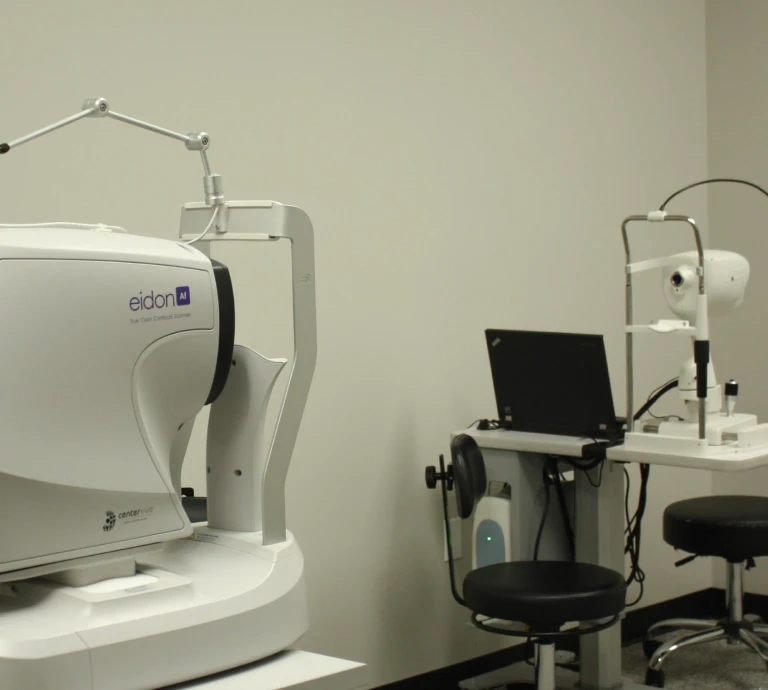
If you have diabetes, annual dilated eye exams are an essential component of your overall health care. At The Eye Gallery, our diabetic eye exams include pupil dilation and diagnostic technology.
Optical coherence tomography (OCT) and fundus photography give us high-resolution, detailed images of your retina, optic nerve, and macula that reveal even the earliest signs of diabetic eye disease. We also assess your internal eye pressure using no-puff tonometry, measure your visual field, and test your visual acuity to monitor your overall eye health and track any changes to your vision.
Each of these tests gives our optometrists vital information about your current eye health to detect any sign of a problem. It also helps us establish a baseline of your vision if no problems are detected, providing an example of what healthy looks like for you that we can measure against in the future.
Preventing Diabetic Eye Disease
You may have heard that old adage, “an ounce of prevention is worth a pound of cure.” That’s especially true regarding diabetic eye diseases. Managing your diabetes and health is the first step to preventing diabetic eye disease:
- Eat a nutritious diet and make exercise a part of your daily routine. This can help control blood sugar, blood pressure, and cholesterol, reducing your risk of diabetic eye diseases.
- Quit smoking. Smoking increases the risks associated with diabetes, including diabetic retinopathy, age-related macular degeneration, cataracts, and glaucoma.
- Attend annual eye exams. Comprehensive dilated eye exams are the most effective tool for detecting early signs of diabetic eye disease.
- Follow all your doctor’s advice and instructions closely.
- Contact us immediately if you notice any changes in your vision in one or both eyes.
Treating Diabetic Eye Disease
Treatment varies depending on the type of disease you develop and the stage it’s in.
For example, early diabetic retinopathy doesn’t usually need treatment. We’ll instead closely monitor your condition and begin treatment if it worsens.
Advanced diabetic retinopathy can be treated with:
- Photocoagulation: a laser surgery that shrinks the abnormal blood vessels in the retina.
- Vitrectomy: a surgery used to remove scar tissue that is impairing vision.
- Anti-VEGF therapy: injections intended to slow the growth of abnormal blood vessels.
We will advise you on any treatment needed and provide referrals to specialists when required, to make sure you receive any necessary measures to help protect your vision.
Is It Time for Your Next Appointment?
In the case that you do develop an eye disease, know that we’ll be there for you every step of the way. From information to treatment to counsel, you will never be alone in managing your ocular condition.
It’s never too early or too late to take care of your eyes. If you have diabetes, we would love to see you for your next diabetic eye exam. Please contact us today or use our online system to book your appointment!

What We Do
Our Services



Our Featured Eyewear Lines









Visit Our Location in Wichita
Our Address
Contact Information
- Phone: 316-315-0321
- Email: info@eyegalleryks.com
Hours of Operation

Kind Words
Patient Testimonials
test
Test
test
test
test
test
Our Google Reviews