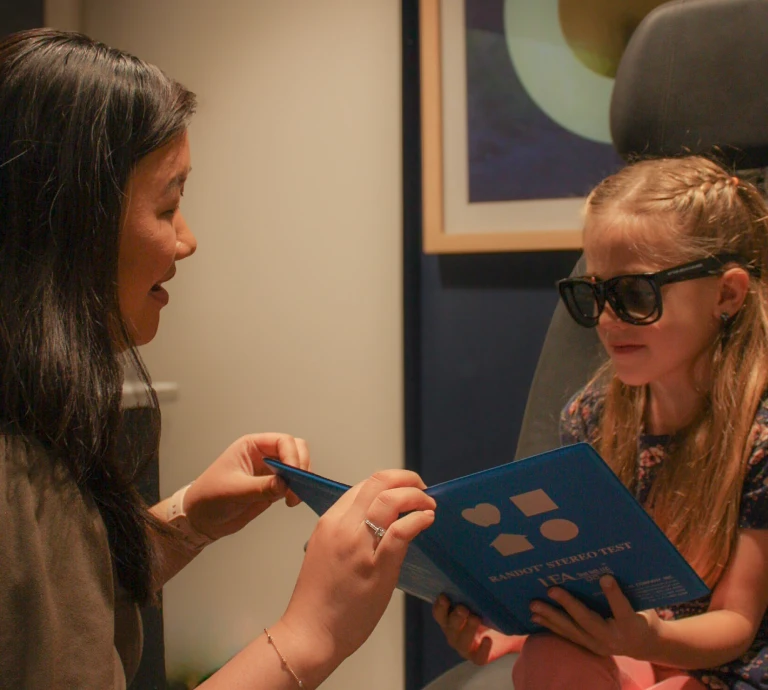

Growing Eyes Need the Most Attention
Eye exams are vital to assess whether your child’s eyes are growing and developing properly. We check for common vision problems with each annual exam, so we can intervene early, if necessary.
We know how challenging it can be to get kids to cooperate, especially since the equipment we use can be scary and intimidating. We’ve paid extra attention to making our clinic kid-friendly and safe, and have trained technicians to keep kids entertained and relaxed during their eye exams.
For our littlest patients, Dr. Baldwin, Dr. Nola, and the eye care professionals at The Eye Gallery go the extra distance to make eye exams as fun and noninvasive as possible. We are also a provider for InfantSee exams for babies between 6–12 months old.
Schedule a quick, essential children’s eye exam at The Eye Gallery today.
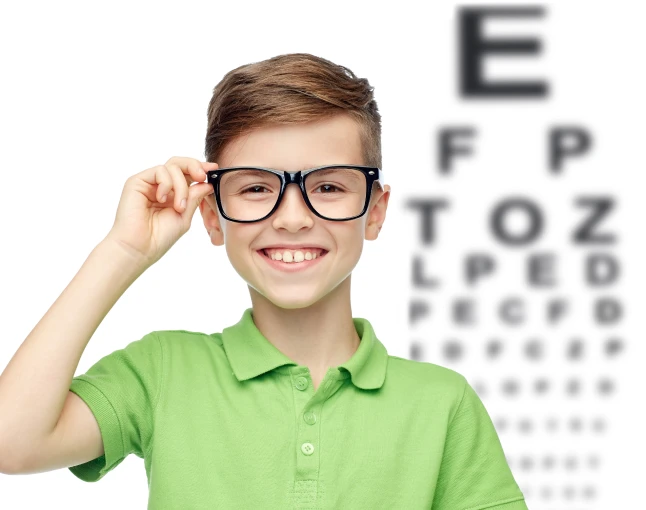
Routine Eye Exams Protect Your Child’s Eye Health
Imagine trying to learn when your vision is blurry, but you don’t recognize the problem. Since nearly 80% of learning is visual, your children need to have healthy eyes and strong visual skills.
Eye exams will also allow us to detect and provide treatments for childhood visual problems, like strabismus and amblyopia, and refractive errors like nearsightedness or astigmatism.
Addressing vision problems early not only supports your child’s success in school, but it also helps prevent these vision errors from impacting further visual or developmental skills as your child continues to learn and grow.
When Do Children Need Their Eyes Checked?
Children require eye exams that coincide with their major visual milestones to make sure their eyes are growing properly and catch any potential visual problems before they interfere with your child’s overall development.
Infants and Toddlers
Babies aren’t born with perfect eyesight; instead, they learn and gain new visual skills and abilities as they grow. An optometrist should check your newborn’s eyes for basic indicators of ocular disease. This may include a red reflex test and a blink and pupil response test.
When your baby is between 6 and 12 months old, they should receive a comprehensive eye exam. This exam will look again at your child’s overall ocular health and check the eyes’ mobility and alignment.
Between the ages of 1 and 2, your child’s eye-hand coordination and depth perception will be well developed. When your child is between 3 and 5, their visual acuity, muscle strength, and alignment should be checked.
Infants and toddlers may start showing signs of strabismus, amblyopia, refractive errors, or other focusing problems. These conditions can affect your child’s ability to learn and develop and may lead to vision impairment if not treated.
School-Aged Children
When your child enters school, they’ll face increasing demands on their eyes. They’ll gain additional visual skills to learn, read, write, and even play sports. Visual skills needed for academic and extracurricular success include:
- Visual acuity
- Eye focusing
- Eye tracking
- Eye teaming
- Eye-hand coordination
- Visual perception
- Recognition
- Comprehension
- Retention
If any of these skills are lacking or if your child has an undiagnosed refractive error, your child will have to work harder to learn and understand effectively.
The Eye Exam Process
Our eye exams are broken down into two parts: pre-testing, which is completed by an optometric assistant, and doctor evaluation, which is conducted by Dr. Baldwin or Dr. Nola.
The pre-testing involves several non-invasive diagnostic tests, including:
- Retinal imaging, using the Eidon Ultra Widefield Retinal Camera
- Ocular coherence tomography, using the OptoVue iVue
- Visual field analysis
- Tonometry, using the “no puff” tonometer
During their exam with the optometrist, Dr. Nola or Dr. Baldwin will use these tools to assess your child’s visual development and function:
- Pediatric toys to assess fixation, incorporating fun into our exams
- Movies, in place of visual charts
- Slit-lamp microscope, to look at the internal eye structures
The optometrist may perform additional tests as needed.
Myopia Management and Why It Matters
During your child’s comprehensive eye exam, we carefully check for signs of myopia (nearsightedness). If diagnosed, a child’s myopia typically progresses and worsens as they grow. This doesn’t just mean thicker glasses; fast-progressing myopia can increase the risk of serious eye diseases later in life.
Unfortunately, traditional glasses or contact lenses don’t help slow myopia progression. While a pair of single-vision glasses can help your child see clearly, they don’t prevent their nearsightedness from getting worse, resulting in a need for new glasses at next year’s exam.
That’s where myopia management comes in. Instead of just correcting blurry distance vision, these specialized treatments actively slow myopia progression. By managing this progression early, we can help protect your child’s long-term eye health.
Symptoms of Possible Eye Problems
Some signs of vision problems are subtle, making it difficult to pinpoint the cause. Watch out for these common symptoms:
- An eye turning in, out, up, or down
- Frequent eye rubbing
- Frequent headaches
- Covering one eye or squinting
- Complaints of discomfort or fatigue
- Avoiding reading or other detailed activities
- Holding reading material too close to the face
- Losing place while reading
- Short attention span
- Difficulty focusing on a task
If you notice your child exhibiting these symptoms, please book them for an eye exam as soon as possible.
Our eye exams are noninvasive, and every step is made with your child’s comfort in mind throughout the exam. If your child requires glasses, we have a great selection of trendy and stylish frames that are designed to keep up with your kids.
Protect your child’s eyes by booking an appointment today!

What We Do
Our Services



Our Featured Eyewear Lines








Visit Our Location in Wichita
Our Address
Contact Information
- Phone: 316-315-0321
- Email: info@eyegalleryks.com
Hours of Operation
Kind Words
Patient Testimonials
test
Test
test
test
test
test
Our Google Reviews