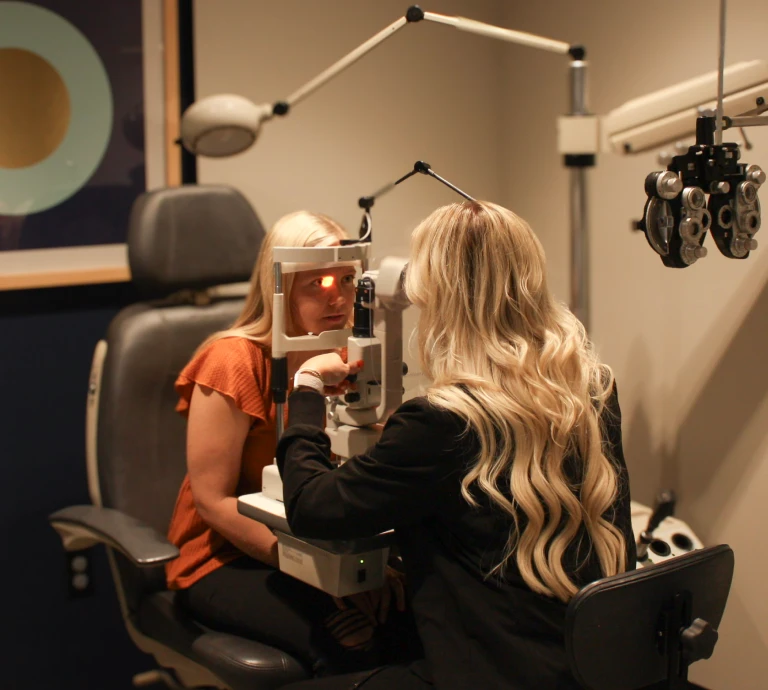

Protect Your Ocular Health With Comprehensive Eye Exams
Our eyes are delicate and complicated organs; they allow us to understand and interact with the world around us in ways no other sense does. It’s important to take proper care of them so they stay strong and healthy throughout your life. And eye exams are the first crucial step to doing so.
At The Eye Gallery, we offer thorough, comprehensive eye exams that assess your visual acuity (how well you can see at various distances), as well as your overall ocular health. By using our technology to capture detailed images, we can monitor your eye health closely to protect and preserve your vision for years to come.
Book your next eye exam in Wichita today.
How Often Are Eye Exams Needed?
The American Optometric Association recommends comprehensive in-person eye examinations at regular intervals, often annually for adults, with frequency adjusted based on age, risk factors, and clinical judgment.
The AOA states that those at risk of developing ocular diseases, ocular health complications, or other eye conditions include individuals with a family history of eye disease, those who live with systemic health conditions like diabetes or heart disease, and those who have had a previous eye surgery or eye injury.
We’ll recommend an eye exam schedule tailored to you after your first exam with us.
Why Are Eye Exams Important?
Even if your eyesight is strong, eye exams are essential for detecting problems and eye diseases at their earliest stages, while they’re still treatable.
However, eye exams don’t only look for signs of disease. They also check your overall ocular health and vision, and include tests for visual acuity, depth perception, eye alignment, and eye coordination. Additionally, eye exams can also detect other health conditions, like high blood pressure, diabetes, and cancer.
As you age, it’s even more important to see your optometrist for regular checkups. Eye conditions and diseases, like age-related macular degeneration and cataracts, become more common as we age. Many of these age-related diseases often lead to preventable vision loss and blindness.
Your optometrist needs to monitor your eye health over time so they can see even the slightest change in your eyes and eyesight. Treatment and management plans are more successful when the disease is caught early.
Conditions We Monitor For During Eye Exams
A comprehensive eye exam does much more than just screen for eye diseases. Our goal is to help you achieve clear, comfortable, and functional vision in your daily life. To do this, we evaluate your entire visual system. This means we assess not only how clearly you can see letters on an eye chart, but also how efficiently your eyes work as a team and how effectively they send visual information to your brain.
During your exam, we use our diagnostic technology and specialized tools to assess for both physical changes and functional vision conditions that can impact your comfort and quality of life.
Prolonged use of computers, smartphones, and tablets can overwork your eye muscles. We check for signs of digital eye strain, which often manifests as physical fatigue, blurred vision, headaches, and neck or shoulder pain after screen use, helping you find strategies and lens solutions to alleviate discomfort.
Dry eye occurs when your eyes don’t produce enough tears, or the tears evaporate too quickly. We evaluate the quality and quantity of your tear film to address symptoms like burning, grittiness, redness, and intermittent blurred vision, so your eyes stay properly lubricated and healthy.
Commonly known as nearsightedness (myopia) and farsightedness (hyperopia), these refractive errors affect how light focuses on your retina. We precisely measure these conditions to provide prescriptions that deliver crisp, effortless vision at all distances.
A natural part of the aging process, presbyopia typically becomes noticeable after age 40 when the eye’s internal lens becomes less flexible. This makes it harder to focus on close-up tasks like reading a menu or texting. We monitor this progression to recommend seamless multifocal contact lenses, progressives, or reading glasses.
BVD occurs when your eyes are even slightly misaligned, causing them to struggle to work together to send a single, clear image to the brain. This constant strain can cause dizziness, headaches, anxiety in crowded spaces, and reading difficulties. We offer specialty lens options and vision therapy to address BVD.
BVD can stem from a variety of sources, including:
- Neurological events, such as a brain injury, concussion, or stroke
- Subtle visual tracking and focusing concerns
- Untreated eye misalignment or developmental issues in childhood
Protect Your Eyes With a Comprehensive Exam Today
Your vision is one of your most valuable assets, and proactive care is the most effective way to protect it. Whether it’s been over a year since your last visit, you’re noticing new symptoms like digital fatigue, or you simply want to make sure your visual system is functioning smoothly, our team is here to help.
Regular comprehensive eye exams do much more than just update your prescription—they safeguard your long-term health and quality of life. Don’t wait for vision changes or discomfort to prompt a visit.

What We Do
Our Services



Our Featured Eyewear Lines









Visit Our Location in Wichita
Our Address
Contact Information
- Phone: 316-315-0321
- Email: info@eyegalleryks.com
Hours of Operation
Kind Words
Patient Testimonials
test
Test
test
test
test
test
Our Google Reviews